
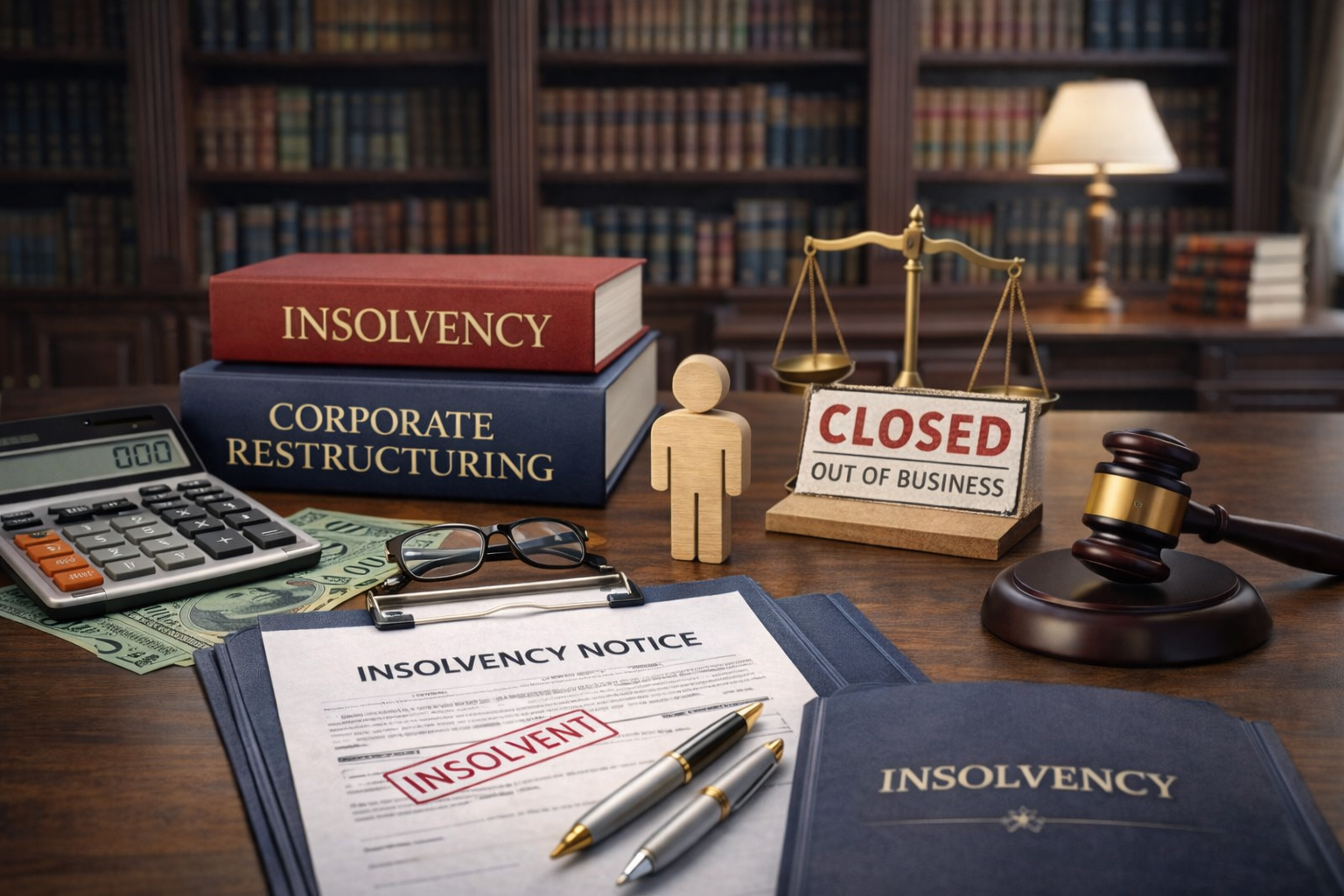
At a Glance
- Voluntary Administration offers a "breathing space" to attempt business rescue
- Directors have a positive duty to prevent insolvent trading under the Corporations Act 2001
- Deeds of Company Arrangement (DOCA) can provide better returns than immediate liquidation
- Small business restructuring reforms offer a simpler path for eligible companies
- Early intervention is the most effective way to mitigate personal liability for directors
The Crossroads of Financial Distress: Restructuring vs. Liquidation
In Australia, insolvency is defined by the "cash flow test": the inability to pay debts as and when they fall due. When a company nears this threshold, directors must choose between attempting a restructure or entering formal insolvency proceedings.
Corporate restructuring is not merely about debt forgiveness; it is a strategic legal process designed to maximise the chances of a company continuing in existence. If a restructure is not viable, the law shifts its focus to liquidation, where the company’s affairs are wound up and assets are distributed to creditors in a priority order determined by statute.
Voluntary Administration and the DOCA
Voluntary Administration (VA) is a flexible process where an independent administrator takes full control of the company. The primary goal is to determine the company’s future and, if possible, save the business.
During the VA period, an automatic "moratorium" is placed on creditor claims. This prevents landlords from evicting the company and secured creditors from seizing assets without court or administrator permission. The process often culminates in a Deed of Company Arrangement (DOCA). A DOCA is a binding contract between the company and its creditors that sets out how the company will operate and pay its debts.
A famous successful example of this was the restructure of Virgin Australia. By entering voluntary administration, the airline was able to shed significant debt and restructure its fleet and operations, ultimately being sold to Bain Capital as a going concern rather than being broken up and sold for parts.
The Perils of Insolvent Trading
One of the most significant risks for Australian directors is Section 588G of the Corporations Act 2001. This section imposes a personal duty on directors to prevent the company from incurring new debts while it is insolvent.
If a director allows a company to trade while insolvent, they may be held personally liable for the debts incurred during that period. This can lead to:
- Civil penalty orders;
- Compensation proceedings by liquidators;
- In extreme cases involving dishonesty, criminal charges.
In cases such as ASIC v Elliott, the courts have made clear that directors are required to properly discharge their duties. In particular, directors cannot take an “ostrich” approach by disregarding the company’s financial position, and are expected to actively monitor the company’s solvency.
The "Safe Harbour" Protection
To encourage directors to attempt to save businesses rather than rushing into liquidation, the Australian government introduced "Safe Harbour" provisions. Under Section 588GA, directors may be protected from insolvent trading liability if they are developing one or more courses of action that are "reasonably likely to lead to a better outcome" for the company than the immediate appointment of an administrator or liquidator.
To access Safe Harbour, a company must generally:
- Ensure employee entitlements (including superannuation) are paid;
- Comply with tax filing obligations;
- Obtain professional advice from a qualified restructuring expert.
Small Business Restructuring (SBR)
Since 2021, a simplified restructuring process has been available for companies with liabilities of less than $1 million. Known as the "debtor-in-possession" model, it allows directors to remain in control of the company while a small business restructuring practitioner helps develop a plan to pay down debt. This is significantly cheaper and less invasive than traditional voluntary administration.
Key Takeaways
- Action is required early: The Safe Harbour and SBR options disappear once a company is hopelessly insolvent.
- Directors are personally exposed: Ignoring insolvency can lead to the loss of personal assets.
- The Moratorium is a shield: Voluntary Administration provides the necessary time to negotiate with creditors without the threat of immediate litigation.
- Documentation is vital: Every decision made during a restructure must be backed by professional advice and financial data to protect against future claims.
Frequently Asked Questions
What is the difference between Liquidation and Administration?
Administration is a process focused on investigating whether a company can be saved or if a better return can be achieved through a DOCA. Liquidation is the final "death" of a company, where its assets are sold and the company is deregistered.
Can I be sued personally if my company goes broke?
Yes. If you allowed the company to trade while insolvent, a liquidator can pursue your personal assets to pay back the company's creditors. You may also be liable for certain tax debts under Director Penalty Notices (DPNs).
What is a "Phoenix" company and is it legal?
Illegal phoenix activity involves transferring assets from an insolvent company to a new entity for little to no value to avoid paying creditors. This is a serious crime and is heavily monitored by ASIC and the ATO.
Does a DOCA mean I don't have to pay all the debts?
A DOCA often involves creditors agreeing to accept a "cents in the dollar" payment in full and final settlement of their claims. However, it requires a majority vote of creditors (both in number and value) to be approved.
How long does the Voluntary Administration process take?
The first meeting of creditors is usually held within 8 business days of appointment, and the second meeting (where the company's fate is decided) is typically held within 20 to 30 business days.
How We Can Help
The line between a successful turnaround and a total loss is often defined by the quality of legal advice received at the first sign of trouble. We assist by:
- Advising on Safe Harbour eligibility and implementation;
- Drafting and negotiating Deeds of Company Arrangement (DOCA);
- Representing directors in insolvent trading and preference payment disputes;
- Guiding small businesses through the SBR process;
- Working alongside insolvency practitioners to ensure the best commercial outcomes for all stakeholders.