
At a Glance
- Sentencing aims to balance punishment, deterrence, and rehabilitation
- Judges use a process called "instinctive synthesis" rather than a mathematical formula
- Mandatory sentencing exists for certain offences but is not the general rule
- Personal circumstances, such as a guilty plea or prior character, significantly impact the final penalty
- Victim impact statements play a crucial role in the court's assessment of harm
The Purpose of Sentencing
In Australia, sentencing is governed by both common law and specific legislation, such as the Crimes (Sentencing) Act 2005 (ACT) or the Crimes (Sentencing Procedure) Act 1999 (NSW). The law dictates that a court may only impose a sentence to achieve one or more of the following purposes:
- Punishment: Ensuring the offender is held accountable in a manner that is just.
- Deterrence: Discouraging the offender (specific deterrence) and the broader community (general deterrence) from committing similar crimes.
- Protection: Keeping the community safe from the offender.
- Rehabilitation: Providing the offender with opportunities to change their behaviour.
- Denunciation: Making it clear that the court and the community condemn the conduct.
The Principle of "Instinctive Synthesis"
One of the most unique aspects of Australian law is the rejection of "tier-based" or mathematical sentencing. As established by the High Court in Markarian v The Queen, judges must perform an "instinctive synthesis." This means the judge considers all the facts, the aggravating features, and the mitigating circumstances simultaneously to arrive at a single appropriate sentence, rather than starting with a number and adding or subtracting years for different factors.
Aggravating and Mitigating Factors
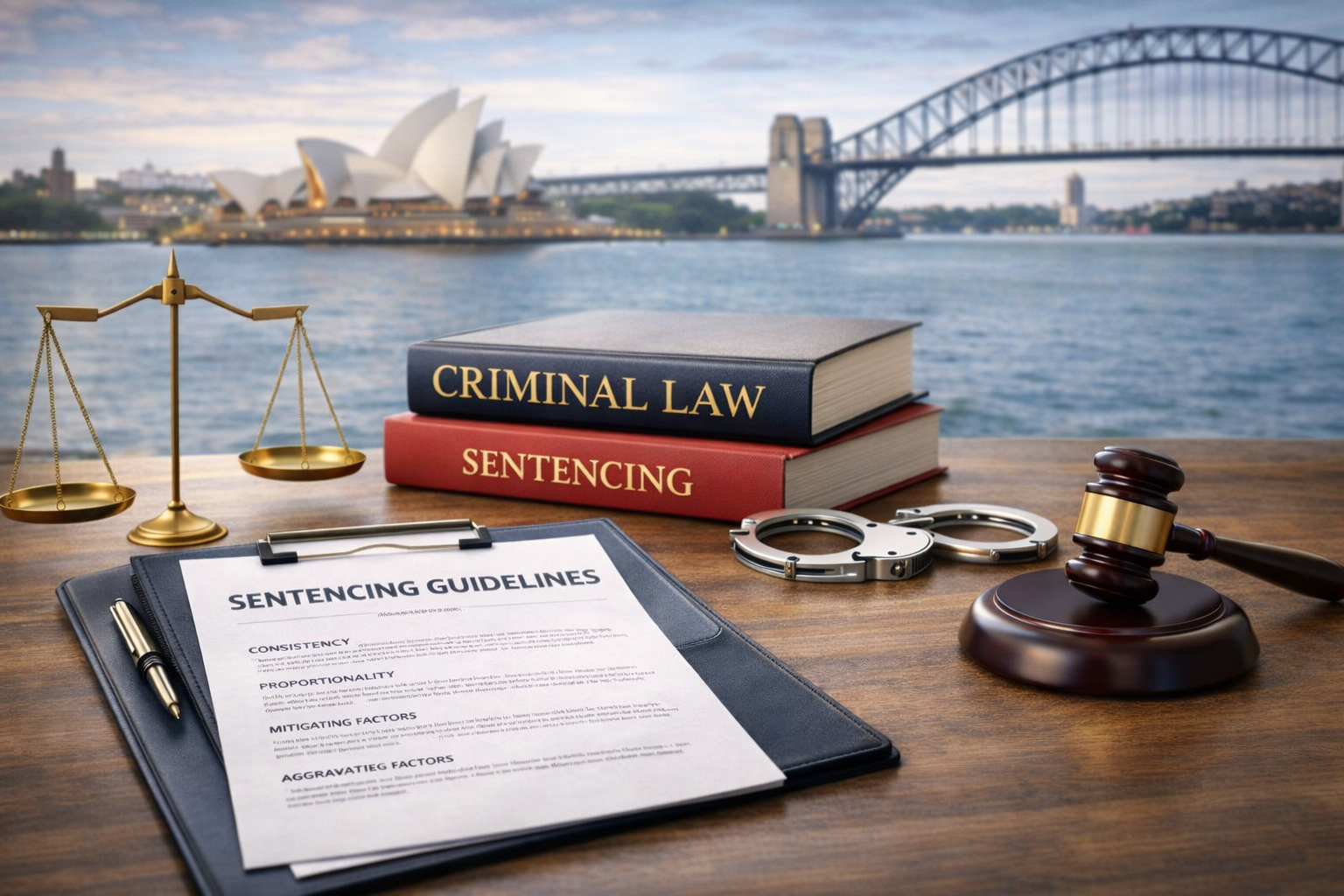
When a judge determines a sentence, they look at specific factors that make the crime worse (aggravating) or less severe (mitigating).
Aggravating Factors
These may include the use of a weapon, a breach of trust (such as an employer stealing from an employee), the vulnerability of the victim, or the offence being committed while the offender was on bail.
Mitigating Factors
These often involve the offender's background. For example, a timely guilty plea usually results in a standard "discount" of up to 25% because it saves the court time and spares victims from testifying. Other factors include evidence of remorse, lack of prior criminal history, or a difficult upbringing (often referred to as Bugmy factors, following the case of Bugmy v The Queen regarding Indigenous disadvantage).
Practical Case Example: The Importance of Proportionality
In the landmark case of Veen v The Queen, the High Court emphasised the "principle of proportionality." This dictates that a sentence must not exceed what is proportionate to the gravity of the crime, even if the offender is considered dangerous. In this case, the court ruled that a person cannot be given a longer sentence than the crime deserves simply to keep them off the streets indefinitely. This ensures that the punishment always fits the specific crime committed.
A Lawyer’s Perspective: Why Context Matters
In our experience, the public often sees a headline regarding a "lenient" sentence and feels a sense of injustice. However, the courtroom reality involves a deep dive into the offender's psyche and history.
For instance, if an offender committed a robbery to fund a sudden drug addiction triggered by a personal tragedy, and they have since completed rehab and shown genuine remorse, a judge may lean toward a suspended sentence or a community-based order rather than full-time imprisonment. The goal is to prevent the person from re-offending, and sometimes, a prison cell is the least effective way to achieve that.
Key Takeaways
- Sentences must be proportionate to the gravity of the offence
- A guilty plea usually leads to a reduced sentence
- Rehabilitation is a primary focus for young or first-time offenders
- "Instinctive synthesis" ensures every case is judged on its unique merits
Frequently Asked Questions
Does a guilty plea mean I won't go to jail?
Not necessarily. While a guilty plea entitles you to a discount on the sentence, if the crime is serious enough, the "discounted" sentence may still involve imprisonment.
What is a Victim Impact Statement?
It is a written statement presented to the court by the victim describing the physical, emotional, or financial harm they suffered. The judge must consider this when determining the sentence.
Can a sentence be appealed if it is too light or too harsh?
Yes. Both the defence and the prosecution (the Crown) have the right to appeal a sentence if they believe there was a legal error or the penalty is "manifestly inadequate" or "manifestly excessive."
What is "Mandatory Sentencing"?
This refers to laws that require judges to impose a minimum prison term for specific crimes, such as one-punch assaults causing death. These laws limit the judge's ability to use "instinctive synthesis."
Will I get a criminal record for every offence?
In some cases, for minor first-time offences, a judge may exercise discretion under "Section 10" (in NSW) or similar provisions elsewhere to find a person guilty but not record a formal conviction.
How We Can Help
We provide expert legal representation for individuals facing sentencing, including:
- Preparing comprehensive subjective materials to highlight mitigating factors;
- Negotiating with the prosecution to drop or downgrade charges;
- Representing clients in sentence appeals to the Higher Courts;
- Advising on the likelihood of various sentencing outcomes;
- Assisting with referrals to rehabilitation and support services to improve sentencing prospects.